Co-Founder · Physical Therapy
Stuart Yeh
PT
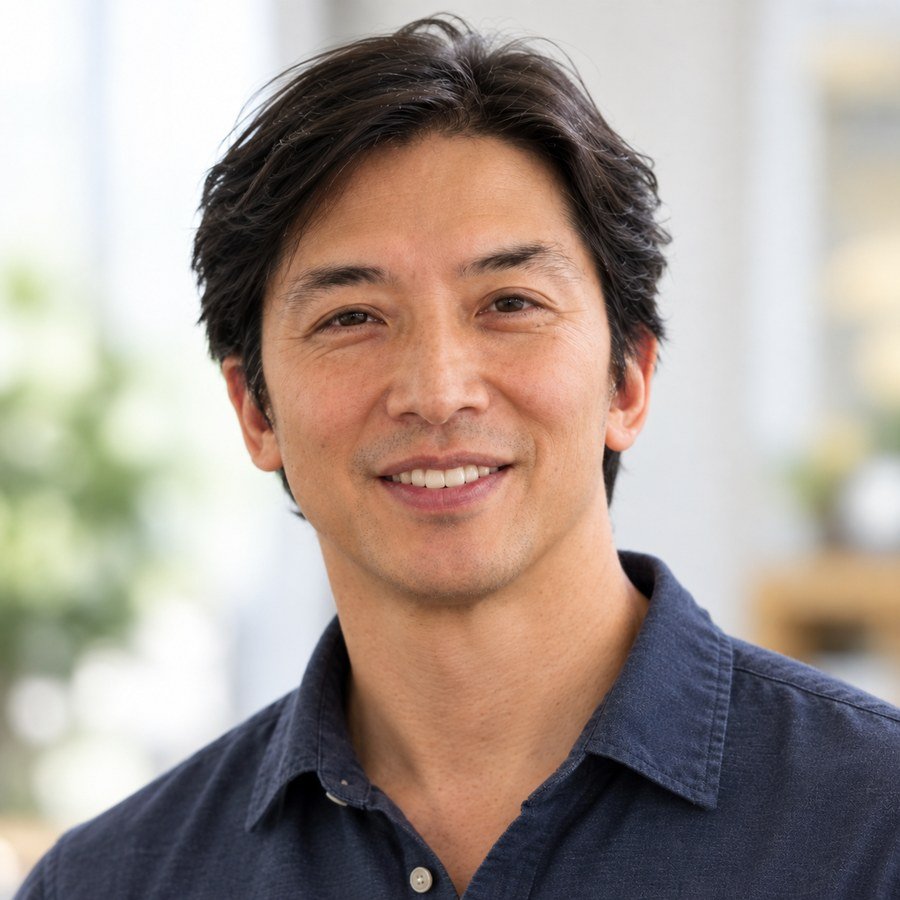
Stuart has practiced physical therapy in New York City since 1994. He and Michael Zazzali have worked together since 1996, and together they founded PTANY in 2002.
Stuart’s path into physical therapy began while he was pursuing pre-medical studies at Cal State University, Long Beach. Offered a position as a physical therapy aide in the clinic of Michael O’Donnell, a PT professor at USC, he had no prior exposure to the field, but observed firsthand the results hands-on treatment could produce for patients in pain. The experience led him to complete a BS in Physical Therapy at Cal State Long Beach in 1993. After a year spent traveling through Europe, Africa, and Asia, he returned to New York and went on to work in private outpatient orthopedic clinics, including one specializing in dancers that integrated Pilates into its physical therapy program.
Early in his career, Stuart recognized that the caliber of manual therapy he had observed in O’Donnell’s clinic, the quality that first drew him to the field, was not widely practiced. He pursued additional training at the Institute of Physical Art under Jeff Ellis, Greg Johnson, and Vicki Johnson, whose methodology trained his hands to recognize movement restrictions and tissue dysfunction that imaging and standard diagnostic tests are not designed to capture. This training shaped the clinical approach he continues to apply today.
In 2001, Stuart directed the Tibetan Physiotherapy Project in Dharamsala, India, established to provide rehabilitation services to survivors of torture. Under his direction, the program expanded into three sites: a department within the local hospital, an outpatient clinic in the village where he resided, and a collaboration with Tibetan doctors at the Tibetan Medical Institute. The project operated largely without sophisticated equipment; treatment relied on careful observation, manual therapy, basic strengthening, and patient education. The experience reinforced something Stuart had already come to believe: effective physical therapy depends less on technology than on the ability to listen, examine carefully, treat skillfully, and teach patients how to participate in their own recovery.
Outside the clinic, Stuart has always been interested in understanding how things work. He programmed databases in college, restores old cars, and takes on woodworking projects, often taking things apart to understand them before figuring out how to put them back together. That same curiosity informs his approach to physical therapy: the structured logic of software, the deductive troubleshooting of a stalled engine, the hands-on problem-solving of building something from raw material. A difficult mechanical problem requires figuring out what is happening, identifying what is contributing to it, and determining what needs to change. Physical therapy is a similar process, except the system is a human body, and the person is part of the solution.